
Performance Thoughts
The reading list.Books worth your time.
Books on mindset, habits, purpose and pressure — each one on this list because it changed something I do.
I built this list because I was looking for it myself. These are the books that changed how I understand performance — what builds it, and what gets in the way.
Read them in any order. Pick the one that fits where you are now, and give it time: it’s about how you implement what you learned from the previous book while you’re reading the next book. That is how a book becomes part of your process.
Every book here earned its place. Each entry says what the book is and what it will change, so you can choose by where you are now.
If something you have read changed how you perform, tell me in the comments — I keep the list current.
Last updated June 2026.
This page contains affiliate links to Amazon and Audible. If you purchase through them we may earn a small commission at no extra cost to you.
Find the right book

The Inner Game of Tennis
Published in 1974 and still the single best book on performing without getting in your own way. Gallwey’s distinction between the inner critic and the body’s natural capacity to execute is the foundation of almost everything written on performance psychology since. If you only read one book on this list, read this one first.

Zen in the Art of Archery
A short, deceptively profound account of learning to release a bow without trying — which turns out to be about learning to perform without conscious interference. What Herrigel documents maps exactly onto what the research calls automaticity. Unusual, memorable, and more useful than it first appears.

Open
One of the most honest books ever written by a professional athlete. Agassi spent most of his career hating the game that made him famous — and still won. Brutally honest about pressure, identity, and what it actually costs to perform at the highest level.

Mindset
The research behind the fixed versus growth mindset distinction that underpins every serious approach to performance development. Dweck’s work on how beliefs about ability shape behaviour, resilience, and long-term development is the most cited body of research in modern performance psychology.

Grit
Duckworth’s research on why talent alone predicts less than most people assume, and why passion combined with perseverance is a better predictor of long-term success. The data behind the concept is more nuanced than the popular summary suggests.

The Chimp Paradox
Peters’ mind management model — used extensively in elite sport — provides a practical framework for understanding emotional interference in performance. Not neuroscience, but an effective tool for managing the emotional hijacking that disrupts performance at critical moments.

The Talent Code
Coyle’s account of hotbeds of talent worldwide and what they have in common. The research on deep practice, ignition, and master coaching is compelling. A more readable version of the deliberate practice literature, grounded in real examples.

Talent Is Overrated
Colvin’s examination of what actually separates world-class performers from everyone else — and the uncomfortable finding that it is not innate talent but specific types of practice done over long periods.

Man’s Search for Meaning
The foundational text on finding meaning under the most extreme conditions imaginable. Frankl’s logotherapy — that meaning is the primary human motivator — is one of the most important performance principles ever written. Short, difficult, and worth every difficult page.
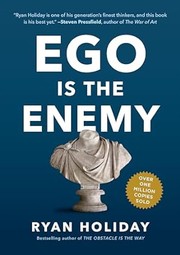
Ego Is the Enemy
Holiday’s case that ego — the need to be seen and validated — is the primary obstacle to doing meaningful work and sustaining performance. Well-researched and useful for any performer who has experienced the difference between performing well and needing to be seen to perform well.

12 Rules for Life
Dense and deliberately challenging. Peterson’s rules are a framework for taking individual responsibility seriously. Not all of it is for everyone, but the chapters on meaning, responsibility, and honest self-assessment are among the most rigorous things written on those subjects in popular form.
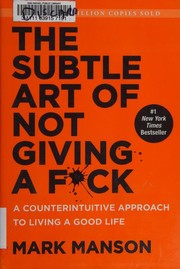
The Subtle Art of Not Giving a F*ck
More rigorous than the title suggests. Manson’s core argument — that meaning comes from choosing what to care about, not from caring about everything — is a useful antidote to the performative positivity that saturates most self-development content.

Never Finished
Goggins is an extreme case study in self-imposed adversity as a development tool. His approach is not for everyone and should not be applied uncritically. But the core argument — that comfort is where development stops — is worth sitting with seriously.

Be Useful
Seven tools for life from someone who has applied them across bodybuilding, film, and politics. Schwarzenegger’s philosophy is more grounded than his biography might suggest — the chapters on vision, goal setting, and working through adversity are direct and honest.

You Do You
Knight’s case for defining your own standards rather than living by other people’s expectations — and the practical mechanics of doing that without burning every professional bridge you have. A lighter read but makes a genuinely serious point about the cost of misaligned performance.
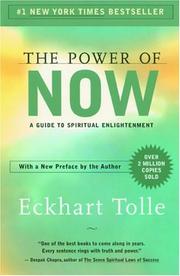
The Power of Now
Tolle’s argument that most human suffering comes from living in mental time — past regret and future anxiety — maps directly onto the performance psychology of attentional control. Whether you engage with the spiritual framing or not, the practical implications for focus and composure under pressure are real.

The Things You Can Only See When You Slow Down
A Korean Buddhist monk’s short meditations on attention, rest, and what gets missed in the relentless pursuit of productivity. A useful counterweight to the high-performance literature — a reminder that performance without reflection is effort without direction.

Drive
Pink’s accessible summary of self-determination theory — autonomy, mastery, and purpose as the foundations of intrinsic motivation. Directly underpins the values-first approach to goal setting across the Performance Thoughts tools.

Flow
The definitive study of peak performance states. Csikszentmihalyi’s research on the state of complete absorption in a challenging task explains what elite performance feels like from the inside and what conditions produce it.

Unshakeable
Primarily about financial freedom but built on a philosophy about what genuine security looks and feels like. The psychological principles about certainty, resilience, and operating from strength rather than fear are applicable well beyond finance.

High Performance and The Winning Mindset
Drawn from the High Performance podcast — one of the UK’s most listened-to shows — and the conversations Humphrey and Hughes have had with elite athletes, coaches, and leaders. The principles are well-evidenced and the case studies are genuinely instructive.

Atomic Habits
The most practical guide to behaviour change available. Clear’s framework — identity before behaviour, systems before goals — maps directly onto the behaviour mapping work in the Performance Goal Setting Planner. The most common objection is that everyone recommends it; they do so because it works.
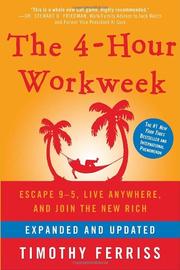
The 4-Hour Work Week
More a book about designing work around life than about doing less work. Ferriss’s concepts of elimination, automation, and lifestyle design are more radical and more useful than the clickbait title suggests. The best thing in it is the framework for distinguishing efficiency from effectiveness.

The 4-Hour Body
A compendium of unconventional physical performance research. The underlying approach — minimum effective dose, tracking, and treating the body as a system to experiment on — is genuinely useful. Read it as a methodology as much as a manual.

Tools for Titans
A reference work more than a book to read linearly — a compilation of tactics, routines, and insights from over 200 world-class performers. Mine it for what’s relevant rather than reading cover to cover.

The 7 Habits of Highly Effective People
Covey’s habits remain among the most practically grounded principles in the self-development literature. The concept of working in your circle of influence rather than your circle of concern is one of the most useful frames for managing attention under pressure.

The 5AM Club
Sharma’s case for protecting the first hour of the day for personal development before the world’s demands arrive. Delivered as a novel which is not to everyone’s taste, but the 20/20/20 formula — movement, reflection, growth — is a practical morning framework worth testing.

Peak
The definitive account of deliberate practice — the specific type of effortful, feedback-informed practice that produces expert performance. The foundation of the post-performance review framework. The section on mental representations explains why structured reflection produces faster development.

Outliers
Gladwell’s examination of how context shapes success — why the 10,000-hour rule requires the right 10,000 hours in the right environment. A useful corrective to both the pure talent narrative and the pure effort narrative.

Bounce
Syed’s exploration of how elite performance is built, drawing on his own experience as a world-class table tennis player. The chapters on the Reading table tennis cluster and the psychological dimensions of choking under pressure are particularly strong.
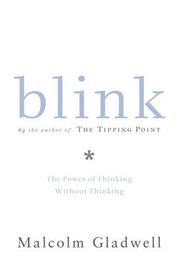
Blink
Gladwell’s exploration of rapid cognition — when to trust snap decisions and when to override them. Directly relevant to performance decision-making, pattern recognition in expert performance, and why experienced coaches see things that beginners cannot.

Legacy
Fifteen lessons from the All Blacks — the most consistently successful team in the history of professional sport. Kerr’s analysis of the cultural and identity principles that drive New Zealand rugby maps directly onto the performance identity work in the Personal Performance Charter.

The Culture Code
Coyle’s investigation into what makes certain groups — from the All Blacks to the US Navy SEALs to Pixar — consistently outperform. The three skills he identifies explain why some teams perform well under pressure and others fall apart.

Diary of a CEO
Bartlett’s 33 laws are drawn from building one of the UK’s fastest-growing companies in his twenties. Honest about failure and less polished than most business books. The laws on identity, emotional strength, and the psychology of decision-making translate well into performance contexts.
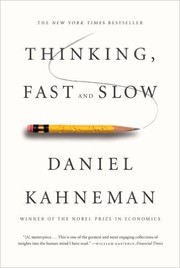
Thinking, Fast and Slow
Kahneman’s summary of a lifetime of research on how humans actually think and decide. The System 1/System 2 framework explains why performance under pressure produces different decisions than performance in practice.

Atlas Shrugged
Rand’s sprawling philosophical novel is a portrait of what it looks like to operate at full capacity — to refuse to perform below your own standard regardless of external pressure or the convenience of mediocrity. Not a management guide. A philosophical provocation about individual excellence.

Essentialism
McKeown’s argument is simple: if you don’t set your priorities, someone else will. Essentialism makes the case for doing less, but doing it on purpose. The most useful book on the shelf for anyone who feels overstretched and unsure what should come first.

Deep Work
Newport’s central claim: the ability to focus without distraction on a cognitively demanding task is becoming both rarer and more valuable — and most of us are losing it without realising. Practical, research-grounded, and uncompromising. If you do knowledge work of any kind, this is the book.

Four Thousand Weeks
The average human life is around four thousand weeks long. Burkeman’s book is what to do with that fact. Less about productivity, more about facing finite time honestly — and deciding what actually deserves your weeks. Will make you close it and reconsider your calendar.

The Practicing Mind
Sterner trains classical pianists. His argument is that the shift from outcome-focused to process-focused thinking is the single biggest improvement most people could make to how they perform. Short, practical, under-read — exactly the kind of book this list exists for.
What should be on this list?
Is there a book that has genuinely changed how you perform, how you develop, or how you think about operating at your best?
Share it in the comments below — title, author, and one sentence on why it matters. The best suggestions will be added to the list.
↓ Leave your recommendation below
Free download · Monthly newsletter
The 7-Action PDF. Free.
Seven actions drawn from performance psychology research, each one explained, each with a practical exercise.
Plus the monthly letter that applies one idea at a time.